
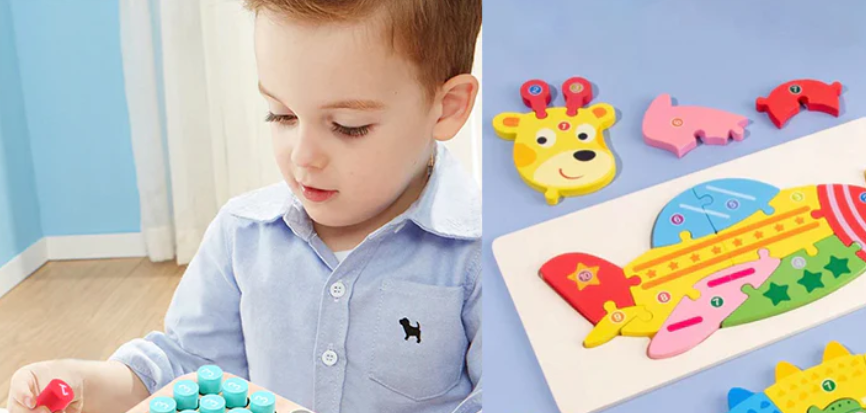
As a parent, you are always looking for ways to support your child’s growth, especially during those critical early years.
Brain development toys can play a significant role in helping your 3-year-old develop essential skills. These toys encourage cognitive growth, fine motor skills, social interaction, and emotional development.
In this guide, we’ll explore the best brain-development toys for 3-year-olds, showing you how they can support your child’s overall learning and growth.
1. Building Blocks: A Classic Toy for Creativity and Problem-Solving
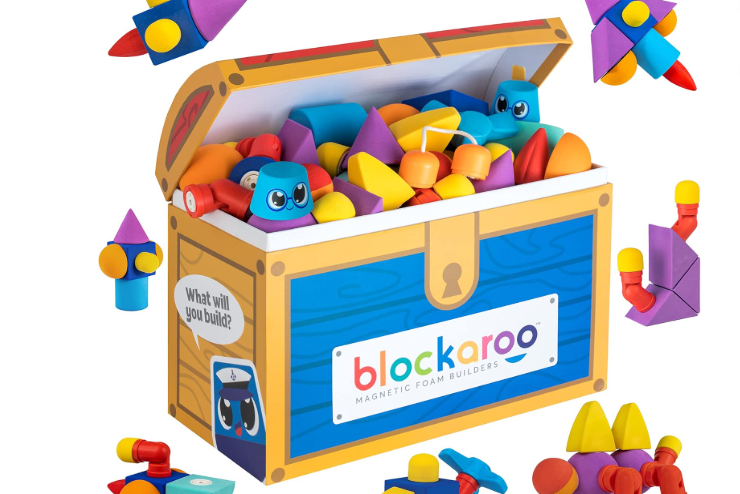

Building blocks are a classic brain development toy that has stood the test of time. These simple, versatile toys help children develop creativity and problem-solving skills.
They allow your little one to use their imagination to create structures and shapes, which strengthens spatial awareness.
Using building blocks encourages your child to think critically about balance, size, and structure. This helps them understand the concepts of cause and effect.
For example, if they place a block too high or too off-center, the structure may fall. This trial-and-error process is crucial for learning and brain development.
Moreover, stacking blocks helps with fine motor skills as your child picks up and places each piece.
The repetitive actions of grasping and stacking can strengthen hand-eye coordination. It also fosters patience as your toddler learns to build progressively larger and more complex structures.
For even more engagement, you can introduce building block sets with different shapes, colors, or patterns. This variation helps your child develop color recognition, sorting skills, and categorization.
Best Building Blocks For Toddlers 2026
#1: Blockaroo Magnetic Foam Building Blocks – 100-Piece Set
#2: Jelly Blox Construction Site Set
#3: Marble Run Building Blocks For Kids
Related Read: 17 Outdoor Learning Activities For Kids
2. Shape Sorters: Fun and Educational for Early Learning
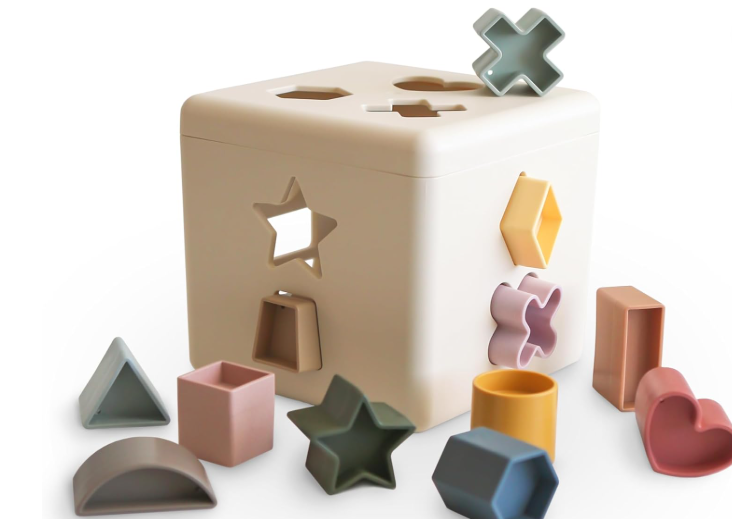

Shape sorters are another fantastic brain development toy for 3-year-olds. These toys challenge your child to match different shapes and sizes with corresponding holes.
While doing this, your child learns to think logically and enhances their problem-solving abilities.
Shape sorters are excellent for helping children develop fine motor skills. As your little one manipulates the pieces, they strengthen their ability to hold, twist, and fit shapes into the right spaces. It’s a wonderful way to develop hand-eye coordination.
Moreover, these toys promote cognitive development. Your child will start to recognize and understand shapes, colors, and sizes. Over time, they will begin to understand basic concepts of geometry.
Shape sorters also encourage independent play, boosting your child’s self-confidence as they master the task.
These educational toys come in a variety of forms, from wooden blocks to plastic containers, making them suitable for every preference.
Whether your child enjoys a traditional shape sorter or a more intricate one, they will benefit from this engaging and educational toy.
Best Shape Sorters For Toddlers
#1: Atoylink Montessori Toys Shape Sorter for Toddlers
#3: Dailyfun Montessori Shape Sorting Toys
3. Interactive Musical Toys: Boosting Auditory and Cognitive Skills
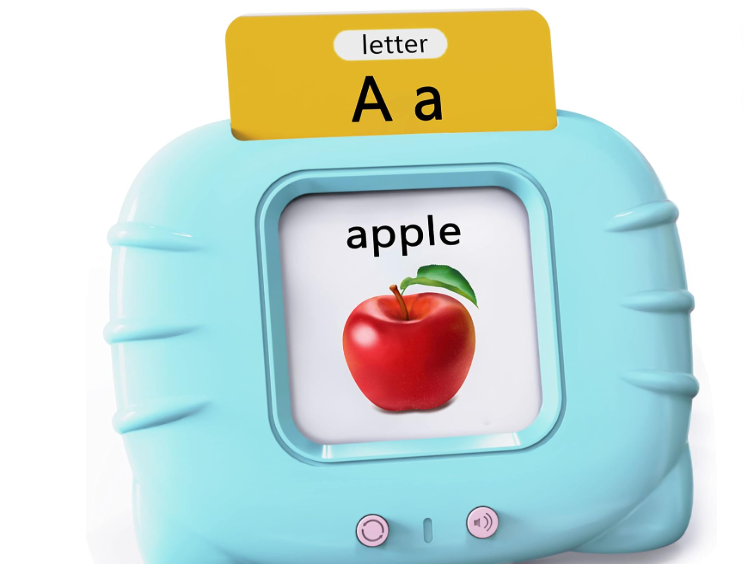

Interactive musical toys are perfect for enhancing auditory development in young children.
These toys teach rhythm, melody, and sound recognition, while also introducing early concepts of cause and effect. When your child presses a button or taps a key, they hear a sound, which teaches them that their actions can create results.
Beyond auditory skills, musical toys are great for cognitive development. They encourage your toddler to explore patterns and repetition.
As they listen to different tunes, they begin to recognize simple musical structures. This can lay the foundation for future music appreciation and learning.
Playing a musical toy also promotes hand-eye coordination. The movements required to hit a drum or press a button strengthen fine motor skills. Additionally, musical toys can support social development as children learn to share and take turns with friends or family during play.
Interactive musical toys come in a variety of styles, from keyboards to drums and even xylophones.
Many toys also offer adjustable volume settings, so you can control the noise level in your home.
Best Musical Toys For Toddlers
#1: Lapare Audible Learning Toys
#2: Ussybaby Toddler Musical Toys
#3: Alilo Pocket Bunny Music Player For Kids
4. Pretend Play Sets: Encouraging Imagination and Social Skills
Pretend play sets, such as kitchen sets, doctor kits, and toolboxes, are incredibly valuable for brain development. This type of educational toy encourages imagination, creativity, and role-playing, which are key to cognitive growth.
When children engage in pretend play, they learn to think abstractly and understand the world around them.
Pretend play is also a great way to teach problem-solving. For example, if your child is playing with a toy kitchen, they might pretend to cook a meal for their dolls. This kind of play fosters understanding of real-world tasks, like making decisions, following sequences, and managing resources.
These toys also promote social skills. When children play with others, they learn to negotiate, share, and take turns. This helps them develop communication skills and emotional intelligence.
Pretend play sets come in many different forms, offering endless possibilities for educational fun. Look for sets that are realistic and encourage cooperative play.
Best Pretend And Play Toys For Kids
#1: Born Toys Pretend And Play Toy Set
#2: Tiny Land Play Kitchen For Kids
#3: Step 2 Great Gourmet Kitchen Play Set For Kids
Related Read: Typical Family Travel Insurance Cost Per Trip
5. Activity Cubes: A Multifunctional Toy for Cognitive Growth
Activity cubes are multi-functional brain development toys that keep your toddler engaged for hours.
Educational toys like this one often feature different activities on each side, such as mazes, shape sorters, spinning gears, and counting beads. They are designed to stimulate various areas of your child’s brain simultaneously.
Activity cubes are excellent for improving fine motor skills. As your child moves beads or twists gears, they strengthen their hand-eye coordination and dexterity.
This helps them develop control over small muscles, which is essential for tasks like writing and drawing later on.
These toys also promote problem-solving skills. The different puzzles and challenges encourage your child to think critically about how to complete each task. Plus, activity cubes are great for teaching numbers, shapes, colors, and even basic math concepts like counting and sorting.
Since activity cubes typically feature a variety of activities, they are perfect for children with short attention spans. Your little one can switch between different activities to stay engaged while improving various skills.
6. Stacking Toys: Learning Patience and Coordination
Stacking toys are simple yet incredibly effective brain development toys. Stacking toys come in various forms, from rings to cups and cones, and encourage your child to stack them in a particular order.
This activity promotes hand-eye coordination, concentration, and fine motor skills.
One of the most valuable aspects of stacking toys is that they teach patience and perseverance. As your toddler attempts to stack the pieces correctly, they begin to understand the concept of balance and symmetry. This helps them develop spatial awareness and the ability to think critically about how objects fit together.
Stacking toys also fosters color and size recognition.
Your child will start to identify different colors and sizes as they work with the pieces. This provides an early foundation for mathematical thinking, as they begin to understand concepts like order, patterns, and sequencing.
Stacking toys are often made from non-toxic materials like wood or soft plastic, making them safe for young children. These toys are perfect for both independent and cooperative play.
7. Sorting Toys: Boosting Cognitive and Sorting Skills
Sorting toys is great for teaching your child to categorize and organize objects.
The act of sorting also develops fine motor skills as your child manipulates the pieces. Whether they’re placing blocks into the right holes or sorting cards by shape or color, these actions enhance their dexterity and hand-eye coordination.
Cognitively, sorting toys helps your child understand basic math concepts. They learn to recognize similarities and differences between objects, which is foundational for counting, addition, and subtraction later on.
It also promotes early language development as your toddler names colors and shapes while playing.
Sorting toys come in many varieties, from simple peg boards to more complex games with multiple pieces. Look for toys that provide a challenge but are still fun and engaging for your child.
8. Books with Interactive Elements: Enhancing Literacy and Cognitive Skills
Books with interactive elements, such as flaps, textures, or buttons that play sounds, are perfect brain development toys.
Interactive books promote cognitive development by stimulating multiple senses. Your child will associate the visual stimuli (like colorful pictures) with sounds and textures, which strengthens memory and recognition skills.
This type of sensory engagement helps them process information in a deeper way.
Reading together also encourages bonding time between you and your child, which supports emotional development. As you read aloud and interact with the book, your toddler begins to understand language patterns and develops early literacy skills.
Many interactive books also encourage problem-solving.
For example, books with puzzles or matching games challenge your child to think critically about where certain pieces should go. This promotes logical thinking and improves their ability to make connections.
9. Push and Pull Toys: Promoting Physical and Cognitive Development
Push and pull toys are wonderful for encouraging physical activity while also promoting brain development. They usually feature strings or handles that your toddler can pull or push around. As they do so, they develop balance, coordination, and muscle strength.
These toys also encourage problem-solving. Your child might need to figure out how to make the toy move or how to keep it from tipping over. This trial-and-error process helps strengthen their cognitive abilities.
Push and pull toys also help with spatial awareness. As your child moves the toy around, they begin to understand the concepts of direction, distance, and space.
Plus, these toys often feature bright colors and shapes, further enhancing visual recognition.
Look for push and pull toys that are durable and designed with safety in mind. They should also be lightweight enough for your toddler to handle easily.
10. Animal Figures: Sparking Imagination and Emotional Growth
Animal figures are perfect for sparking your child’s imagination and supporting emotional growth.
Such figures can be used in pretend play scenarios where your child creates stories and dialogues. This type of play helps develop both creativity and empathy.
As your child interacts with the animal figures, they learn to understand emotions and relationships. For instance, playing out a scenario where one animal helps another teaches kindness and cooperation. This is essential for emotional development.
Animal figures also promote language development. When your child names the animals and creates stories, they practice their language skills and improve their vocabulary.
These toys are often made of durable, non-toxic materials. Look for sets that offer a variety of animals, from farm animals to wild animals, to keep your child engaged.
11. Counting Toys: Introducing Numbers in a Fun Way
Counting toys are perfect for introducing your child to basic math concepts. Counting toys typically involve counting beads, buttons, or other objects. As your toddler plays, they learn to count from 1 to 10 and beyond.
Counting toys helps with early numeracy skills. Your child will begin to recognize numbers and understand their value. This provides a foundation for later learning in math, as they begin to grasp concepts like addition and subtraction.
In addition, counting toys improves fine motor skills as your child picks up and places the counting pieces.
These toys are often interactive, allowing your child to manipulate the objects in different ways, which supports cognitive development.
Look for counting toys that have colorful, easy-to-grasp pieces. These toys should be simple enough to keep your child engaged without overwhelming them.
12. Puzzle Toys: Encouraging Problem-Solving and Critical Thinking
Puzzle toys are excellent for promoting brain development. These toys require your child to fit different shapes or pieces together, which encourages problem-solving and critical thinking.
As they work to complete the puzzle, your child enhances their cognitive abilities.
Puzzle toys help develop spatial awareness as your child learns to visualize how pieces fit together. They also support hand-eye coordination and fine motor skills, as your child manipulates the pieces to solve the puzzle.
Additionally, puzzles teach patience and perseverance.
Your toddler will learn to work through challenges and think critically about how to complete a task. This type of thinking is essential for future academic success.
Puzzle toys come in many forms, from wooden puzzles to 3D models. Choose puzzles that are age-appropriate and offer just the right amount of challenge.
13. Fine Motor Skill Toys: Strengthening Small Muscle Control
Fine motor skill toys are designed to help your child develop control over small muscles.
Interestingly, fine motor skills are crucial for tasks like writing, drawing, and feeding. Such educational toys can help your toddler build the necessary muscle strength and coordination needed for everyday activities.
They also encourage independence, as your child gains the ability to perform tasks on their own.
Look for toys that offer a variety of activities to engage your child’s hands and fingers. From lacing beads to dress-up dolls, these toys are fun and educational.
Related Read: The Best AI Tools For Kids Education
Frequently Asked Questions About Brain Development Toys
1. What are brain development toys, and why are they important?
Answer:
Brain development toys are toys specifically designed to stimulate cognitive, motor, and sensory development in children. These toys encourage skills such as problem-solving, creativity, memory, coordination, and emotional intelligence. They are essential because they help young children build a strong foundation for learning and cognitive abilities. Early brain development can set the stage for a child’s future success in academics, social interactions, and overall well-being.
2. At what age should I start using brain development toys for my child?
Answer:
You can start using brain development toys as early as infancy. Newborns benefit from sensory toys that engage their sight, sound, and touch. By the age of 1 to 3 years, your child will be able to engage in more complex toys that enhance fine motor skills, problem-solving abilities, and language development. As your child grows, you can gradually introduce more challenging toys that promote advanced cognitive skills.
3. How do brain development toys help improve my child’s motor skills?
Answer:
Brain development toys, especially those that involve stacking, sorting, or manipulating objects, help improve your child’s fine motor skills. By performing activities like grasping, squeezing, and fitting pieces together, your child strengthens the small muscles in their hands and fingers. Toys such as building blocks, puzzles, and lacing beads require precise movements, which promote hand-eye coordination and manual dexterity.
4. Are educational toys and brain development toys the same?
Answer:
Educational toys and brain development toys often overlap but aren’t always the same. Educational toys focus on teaching specific knowledge or skills, such as numbers, letters, or shapes, while brain development toys aim to enhance a range of cognitive abilities, including problem-solving, memory, and emotional intelligence. While many brain development toys are educational, not all educational toys are designed to stimulate overall brain growth.
5. How do brain development toys foster creativity in young children?
Answer:
Brain development toys, such as building sets, art supplies, and pretend play kits, encourage children to use their imagination and think creatively. These toys allow children to explore different possibilities, solve problems in their own way, and invent their own worlds. By engaging in open-ended play, such as building a fort or pretending to cook a meal, children develop flexibility in thinking, learn to approach problems from multiple angles, and nurture their innate creativity.
Related Read: Popular Educational Toys For Everyday Learning
6. Can brain development toys help with language and communication skills?
Answer:
Yes, brain development toys can significantly support language and communication skills. Toys like interactive books, musical instruments, and dolls encourage verbal interactions and storytelling. By talking through their play, children practice new vocabulary, sentence structures, and communication skills. Additionally, many toys prompt questions and discussions, which helps children improve their ability to express thoughts and understand others.
In conclusion, brain development toys for 3-year-old babies play a vital role in shaping your child’s cognitive and motor skills. By providing a variety of toys that promote creativity, problem-solving, and physical development, you are setting the foundation for lifelong learning. Whether you’re looking to enhance your child’s language skills, social interaction, or imagination, there are countless options to choose from.
Leave a Reply Cancel reply