
If you’re trying to decide between an infant car seat and a convertible car seat, you’re probably wondering which one truly fits your lifestyle, not just what everyone else is buying.
As a young parent, you might be thinking about quick school runs, rideshares, doctor visits, road trips, or simply getting your baby in and out of the car without stress.
The right choice isn’t just about safety standards (both types meet them); it’s about how you’ll actually use the seat every single day.
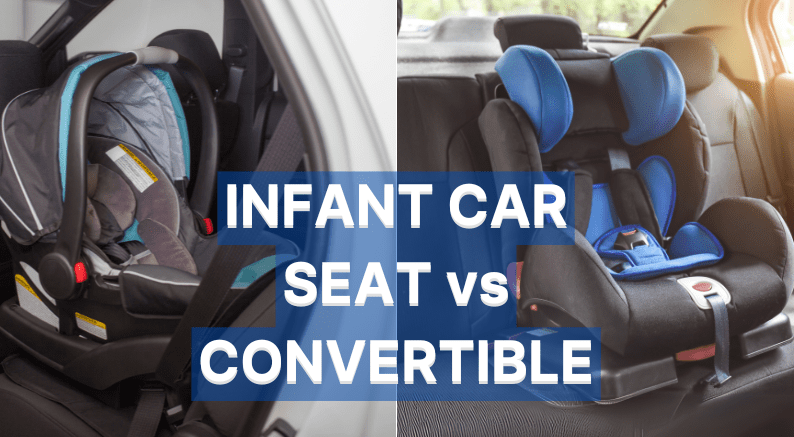
An infant car seat is designed for newborns and smaller babies. It’s rear-facing only and comes with a removable carrier that clicks into a base in your car. If your baby falls asleep, you can lift the whole seat out without waking them, which is helpful for short errands or when you’re on the move.
A convertible car seat, by contrast, stays installed in your vehicle. It starts rear-facing for infants and later switches to forward-facing as your child grows, making it a long-term option that can last for years.
So how do you choose?
Think about your daily routine, your budget, and how long you want the seat to last before an upgrade. If portability and convenience during the newborn stage matter most, an infant seat might make your life easier. If you prefer buying once and using it for several years, a convertible seat could be the smarter investment.
In this guide, we’ll walk through the real-life pros, costs, and use cases so you can confidently choose what works best for you and your baby.
Infant Car Seat vs Convertible Car Seat: Understanding The Basics
Before you decide which seat to buy, let’s slow things down and really understand what each option is designed to do. When you know how each one works in real life, not just in theory, the decision becomes much easier.
What Is an Infant Car Seat?
An infant car seat is made specifically for newborns and small babies. It’s rear-facing only, which means your baby faces the back of the car at all times while using it.
This is important because rear-facing is the safest position for babies; it protects their delicate head, neck, and spine during a crash.
These seats are designed with tiny babies in mind. They usually:
- Fit newborns as small as 4 pounds
- Go up to around 30–35 pounds, depending on the model
- Have extra head and body support for small infants
One of the biggest advantages? Portability.
Most infant car seats come in two parts:
- A base that stays installed in your car
- A detachable carrier that clicks in and out
That carrier makes life easier for new parents. If your baby falls asleep during a drive, you can unclick the seat and carry them inside without waking them. When you’re exhausted and running on two hours of sleep, that matters more than you can imagine.
Infant seats are also compatible with many strollers, creating a travel system. You can move the seat from the car to the stroller frame in seconds, with no need to unbuckle your baby.
For quick errands, doctor visits, or grocery runs, this convenience is huge.
In short, infant car seats are:
- Made specifically for newborn safety
- Easy to carry
- Extremely convenient in the first year
But remember, babies grow fast. Once they reach the height or weight limit, you’ll need to switch to another seat.
What Is a Convertible Car Seat?
A convertible car seat is designed to grow with your child. Instead of being rear-facing only, it converts from rear-facing to forward-facing when your child is older and meets the safety requirements.
Here’s what makes it different:
- It starts rear-facing for infants.
- Later, it turns forward-facing for toddlers.
- Many models support rear-facing up to 40–50 pounds, which is excellent for extended rear-facing safety.
That higher rear-facing weight limit is important. Safety experts recommend keeping children rear-facing as long as possible, ideally until they reach the maximum rear-facing limit of their seat.
However, there’s one major difference you should know:
Convertible seats are not portable.
They don’t detach like infant carriers. Once installed, they stay in your vehicle. You’ll be taking your baby in and out of the seat every time, even if they’re asleep.
They’re also:
- Bulkier
- Heavier
- More permanent in structure
The upside is you likely won’t need to buy another seat for several years. A good convertible seat can last from infancy through toddlerhood, sometimes even into early elementary age, depending on the model.
So What’s the Real Difference?
Think of it this way:
- Infant car seat = built for convenience and tiny newborns.
- Convertible car seat = built for long-term use and extended safety.
As a young parent, your decision often comes down to lifestyle. Do you want maximum convenience in the exhausting newborn months? Or would you rather invest in one seat that lasts for years?
In the next section, we’ll compare them side by side so you can clearly see which one fits your family best.
Convertible vs Infant Car Seat: The Key Differences
Now that you understand what each seat is designed to do, let’s talk about what really matters in your everyday life.
When you’re a young parent, this decision isn’t just about specs. It’s about convenience at 7 a.m., grocery runs with a sleeping baby, tight back seats, and your budget.
Let’s break it down clearly.
1. Usage Duration: Short-Term vs Long-Term
An infant car seat is a short-term solution. Most babies outgrow it within the first 9–15 months, depending on their growth.
A convertible car seat, on the other hand, is built for the long haul. It can take your baby from infancy through toddler years, sometimes up to 5–10 years, depending on the model.
If you prefer:
- Buying once and being done → Convertible seat
- Starting small and upgrading later → Infant seat
2. Portability: Removable vs Fixed
This is one of the biggest lifestyle differences.
With an infant seat, you can:
- Remove the carrier from the base
- Carry your baby without unbuckling them
- Click it directly into a stroller
If your baby falls asleep in the car (If your baby falls asleep in the car, this feature feels like magic in the vehicle. You’ll need to:
- Take your baby out every time
- Transfer them into a stroller or carrier manually
If you’re often on the go, portabilityIf you’re often on the go, portability can make a big difference in your stress.
Infant seats typically use:
- A base that remains installed in the car
- The carrier clicks in and out
You can even buy extra bases for multiple cars.
Convertible seats:
- Install directly into the vehicle
- Stay there permanently
- Doesn’t require a separate base
Both are safe when installed correctly; it just depends on how often you’ll move the seat between vehicles.
4. Price Structure: Two Seats vs One Extended-Use Seat
Here’s the financial reality.
With an infant seat, you’ll eventually need to buy a convertible seat. So you’re paying for two seats over time.
With a convertible seat, you’re investing more upfront in a product that lasts for years.
If you’re budgeting carefully:
- Infant seat = lower upfront cost, higher total over time
- Convertible seat = higher upfront cost, potentially lower long-term cost
5. Space Requirements in Your Vehicle
Infant seats are generally more compact, especially helpful if you drive:
- A small sedan
- A compact SUV
- A car with limited backseat space
Convertible seats tend to be bulkier. Some models take up more room, especially when installed rear-facing.
If you’re tall and need legroom in the front seat, this is worth considering.
6. Travel and Lifestyle Flexibility
If you:
- Use rideshares often
- Switch between vehicles
- Travel frequently
- Run quick errands
An infant seat offers more flexibility in the early months.
If you:
- Mostly drive one vehicle
- Don’t mind transferring the baby in and out
- Want simplicity long-term
A convertible seat may fit your lifestyle better.
Side-by-Side Comparison
Here’s a quick visual breakdown to help you see everything clearly:
|
Weight Range
|
~4–30/35 lbs | ~5–40/50 lbs rear-facing; higher forward-facing limits |
|
Rear-Facing Limits
|
Rear-facing only | Rear-facing first, then converts |
|
Forward-Facing Capability
|
No | Yes |
|
Portability
|
Detachable carrier | Fixed in vehicle |
|
Average Lifespan of Use
|
~9–15 months | Several years (often up to 5–10 years total seat lifespan) |
|
Typical Price Range
|
Moderate upfront, but requires second seat later | Higher upfront, no immediate upgrade needed |
|
Best For
|
Parents who want convenience and easy transfers | Parents who prefer long-term value and fewer upgrades |
So What Should You Focus On?
Ask yourself:
- Do I want maximum convenience during the newborn stage?
- Am I okay buying another seat later?
- How much space does my vehicle have?
- How often will I move the seat between cars?
- What fits my budget right now?
There isn’t one “perfect” answer. Only what fits your life.
In the next section, we’ll look at safety considerations so you can feel completely confident in whichever option you choose.
Baby Car Seat Safety Considerations
If you’re like most young parents, this is the section you care about the most.
Convenience is great. Budget matters. But at the end of the day, you just want to know one thing:
Which one keeps my baby safer?
Let’s walk through this carefully and clearly.
Safety Standards
First, here’s something that should give you peace of mind:
Both infant and convertible car seats must meet the same federal safety standards before they can be sold.
In the United States, all car seats must comply with Federal Motor Vehicle Safety Standard (FMVSS) 213. That means:
- They are crash-tested.
- They must meet strict head injury and chest injury criteria.
- They must pass specific performance requirements in simulated crashes.
So no matter which type you choose, it has met the same baseline safety regulations.
One is not automatically “safer” than the other just because of the category. What matters more is:
- Correct installation
- Proper fit for your child
- Using it as instructed
That’s where safety truly lives.
Rear-Facing Protection
Now let’s talk about rear-facing, because this is important.
Rear-facing is the safest position for infants and toddlers. In a crash, it:
- Supports the head, neck, and spine
- Distributes crash forces across the entire back
- Reduces stress on fragile bones and ligaments
Infant car seats are designed exclusively for rear-facing. They’re optimised for newborn positioning, meaning:
- The recline angle supports tiny airways
- The harness fits very small shoulders properly
- The shell is shaped specifically for early head control
Convertible seats also start rear-facing, and many actually allow rear-facing for longer, sometimes up to 40–50 pounds. That extended rear-facing capacity is a major advantage for long-term safety. The longer your child can stay rear-facing within weight and height limits, the better.
So:
- Infant seats = excellent newborn support
- Convertible seats = extended rear-facing potential
Both can be extremely safe when used correctly.
Side-Impact Protection
Side-impact crashes are serious, so protection here matters.
Many modern seats, both infant and convertible — include:
- Reinforced headrests
- Deep side wings
- Energy-absorbing foam (often EPS or EPP foam)
Convertible seats tend to have larger, more robust structures simply because they’re bigger overall.
Infant seats, however, cradle smaller babies more snugly, which can provide excellent containment for newborns.
The key difference isn’t necessarily safety level; it’s structural design. Convertible baby car seats are built to adapt over time, while infant seats are designed to tightly protect a smaller body.
Fit for Small Newborns
This is where infant seats often have a slight edge, especially for tiny babies.
Infant car seats typically include:
- Removable newborn inserts
- Adjustable recline angles
- Harness systems designed for very low shoulder heights
For premature babies or very small newborns, getting a proper harness fit can be easier in an infant seat.
Convertible seats can safely fit newborns, too, but not all models fit very small or premature babies equally well. Some may have:
- Higher minimum weight requirements
- Less snug positioning for very tiny infants
This is why many hospitals prefer or recommend infant seats for discharge, especially if your baby is under 6–7 pounds. Some hospitals even perform a “car seat tolerance test” for premature infants before discharge.
If you’re expecting a smaller baby or a preterm delivery, this is an important consideration. something many parents don’t realise:
The safest car seat is the one that is installed and used correctly.
Studies consistently show that misuse rates are high. Common errors include:
- Loose installation
- Harness straps are too loose
- The chest clip is in the wrong position
- Incorrect recline angle
Infant seats are sometimes easier for first-time parents to install because the base stays in place and the carrier clicks in. Some parents misuse them by not tightening the base properly.
Convertible baby car seats can be slightly more complex to install at first because they’re larger and remain in the vehicle, but once properly installed, they don’t get moved as often.
In real-world safety, correct installation matters more than the category of the baby car seat.
If you ever feel unsure, consider:
- Visiting a certified Child Passenger Safety Technician (CPST)
- Attending a local car seat inspection event
- Watching manufacturer installation videos carefully
The Honest Safety Bottom Line
Both infant and convertible seats can protect your baby extremely well.
Infant seats:
- Excel in newborn fit
- Offer optimised early positioning
Convertible seats:
- Allow longer rear-facing use
- Provide extended long-term protection
Your job isn’t to find the “perfect” seat.
Your job is to choose one that:
- Fits your baby properly
- Fits your car correctly
- Fits your lifestyle realistically
- And that you can use consistently and correctly
Convenience and Everyday Use
Parenting isn’t just about what’s safest on paper. It’s about what works when you’re exhausted, running late, and your baby just fell asleep five minutes before you got home.
This is where real-life convenience matters.
Baby Car Seat Portability
One of the biggest advantages of an infant car seat is portability.
Picture this:
You pull into your driveway. Your baby is finally asleep after a rough afternoon. With an infant seat, you unclick the carrier and walk inside. No unbuckling. No transfer. No restart of the crying cycle.
That alone can feel priceless.
Portability also helps when:
- It’s cold outside, so you can buckle the baby in indoors.
- It’s raining, less exposure while transferring.
- You’re making quick errands, in and out, without disturbance.
With a convertible seat, you’ll need to lift your baby out every single time. Sometimes they’ll stay asleep. Sometimes they won’t.
If you’re constantly on the go, that difference adds up.
Compatibility With Travel Strollers
Infant seats are often designed to click directly into compatible strollers. This creates what’s known as a travel system.
What that means for you:
- No unbuckling, baby.
- No repositioning.
- Smooth transition from car to stroller in seconds.
For doctor appointments, grocery runs, or school pickups, this can make your life dramatically easier during the newborn stage.
Now let’s talk money.
Buying a full travel system (car seat + stroller designed together) can sometimes be more cost-effective than buying them separately. But you are still investing in a travel system you’ll likely outgrow within a year or so.
Convertible seats don’t click into strollers. So if you choose one from birth, you’ll need:
- A separate stroller.
- Or a baby carrier for outings.
That’s not a deal-breaker, but it does change how you move through your day.
Installation and Reinstallation
Infant seats typically use a base that stays installed in the car.
Once the base is correctly secured:
- The seat clicks in and out.
- You don’t reinstall it every trip.
- You can buy extra bases for multiple vehicles.
If grandparents, babysitters, or your partner use different cars, this setup can make transitions easier.
Convertible seats install directly into the vehicle using the seat belt or LATCH system. They don’t have a detachable base.
They can be more complex to install at first because they’re larger and heavier. But once installed correctly, you usually leave them in place.
If you frequently switch vehicles, moving a convertible seat can feel more time-consuming than moving an infant carrier.
Baby Car Seat Storage and Space
Vehicle size matters more than many parents expect.
Infant seats are generally compact. They fit well in:
- Smaller sedans
- Compact SUVs
- Vehicles with limited rear legroom
Convertible seats can be bulkier, especially when installed rear-facing. Some models take up significant front-seat space.
If you or your partner is tall and needs legroom, check this before purchasing.
That said, many brands now offer compact convertible models specifically designed for smaller cars. If you love the long-term value of a convertible seat, look for space-saving designs.
Budget and Long-Term Value
Now let’s talk about the numbers, because raising a baby isn’t cheap.
Initial Cost Comparison
Infant car seats typically have a moderate upfront cost. Baby car seat prices vary by brand and features, but they’re often less expensive than high-end convertible seats at the time of purchase.
Convertible seats usually cost more upfront, especially models with extended rear-facing limits and advanced safety features.
So at checkout:
- Infant seat = lower immediate investment
- Convertible seat = higher upfront investment
Total Cost Over Time
Here’s where the bigger picture comes in.
If you choose an infant seat, you’ll eventually need to purchase a convertible seat later.
That means:
- First purchase (infant seat)
- Second purchase (convertible seat)
If you choose a convertible seat from birth and it fits your newborn well, you may only need one seat for several years.
So long-term:
- Infant route = two purchases
- Convertible-from-birth route = potentially one purchase
Your budget today might influence this decision most.
Related Read: Graco 4Ever DLX vs Nuna Rava
Lifespan and Expiration Dates
All car seats have expiration dates. Most fall within a 6–10 year window from the date of manufacture.
Why expiration matters:
- Materials degrade over time.
- Safety standards evolve.
- Manufacturers set specific usage limits.
If you buy a convertible seat with a long expiration period, it may last through multiple growth stages, and possibly even another child if timing allows.
Infant seats have expiration dates too, but since they’re used for a shorter period, they often spend more time unused afterwards.
Understanding expiration helps you calculate real long-term value.
Resale and Hand-Me-Down Considerations
This is important.
Car seats are generally not recommended for resale because:
- You may not know their crash history.
- Damage can be invisible.
- Safety performance can’t be guaranteed.
Many manufacturers discourage or prohibit resale.
Hand-me-downs within close family can be acceptable if:
- The seat has never been in a crash.
- It’s within its expiration date.
- All original parts and manuals are included.
With safety equipment, certainty matters more than saving a few dollars.
Related Read: Best Travel System For Tall Parents
The Real-World Bottom Line
If your priority is:
- Maximum convenience during the newborn stage → Infant seat feels easier.
- Long-term value and fewer purchases → Convertible seat makes sense.
There isn’t a universally “better” choice. Only what works best for your daily routine, your vehicle, and your budget.
Lifestyle Considerations
Choosing between an infant and a convertible car seat isn’t just about safety ratings or budget. It’s about your daily life. Your routine, environment, and support system might influence your decision.
If you live in a city and rely on:
- Public transportation
- Taxis or rideshares
- Walking frequently
An infant seat can make transitions smoother. You can carry your baby securely between vehicles without uninstalling the seat each time.
That portability matters when you’re navigating sidewalks, elevators or busy streets.
Apartment living adds another layer. If you’re climbing stairs or using elevators regularly, carrying a detachable infant seat can be easier than repeatedly transferring your baby in and out of a fixed convertible seat.
In suburban settings, where you mostly drive your own vehicle and park close to home, a convertible seat may feel just as practical, especially if it stays installed full-time.
Frequent Travellers
If you travel often, think about how your seat will function beyond your driveway.
Airplane compatibility:
Many infant and convertible seats are approved for air travel, but infant seats are often lighter and easier to carry down narrow airplane aisles.
Airport convenience:
Rolling a stroller with a click-in infant car seat through security can simplify movement. A bulky convertible seat may require a dedicated travel cart or carrying strap.
Rental cars:
Infant seats with a base can be installed without the base using a seat belt if needed. Convertible seats can also work well in rental cars, but installation may take more time.
If you anticipate frequent flights or road trips, convenience in transit becomes a key factor.
Multiple Caregivers
If grandparents, daycare providers, or a partner regularly help with transportation, think about how often the seat will move between vehicles.
Infant seats can be simpler in shared-care situations:
- Install multiple bases.
- Click the carrier into whichever car is needed.
- Less frequent full reinstallation.
Convertible seats can work, but moving them repeatedly requires proper reinstallation each time. That takes more effort and careful attention.
If multiple caregivers are part of your daily routine, ease of transfer may reduce stress.
Climate and Seasonal Factors
Your climate matters more than many parents expect.
Cold climates:
Heavy coats are not safe under harness straps. With an infant seat, you can:
- Strap baby in indoors.
- Cover them with a blanket over the harness.
- Minimise cold exposure during transfer.
With a convertible seat, you’ll typically strap the baby in while inside the car, which may mean dealing with cold temperatures more directly.
Hot climates:
Ventilation becomes important. Some convertible seats offer enhanced airflow panels and breathable fabrics. Infant seats can warm up quickly in hot cars if left inside.
If you live somewhere with extreme seasonal changes, consider which setup makes everyday weather management easier.
Age and Developmental Factors
Your baby’s stage of growth also plays a big role in this decision.
Newborn Stage (0–3 Months)
In the first few months, babies need:
- Strong head and neck support
- Proper recline angles for airway protection
- Snug harness positioning
Infant seats are specifically shaped to cradle newborns. The inserts and compact design often provide an especially secure fit for tiny bodies.
This stage also includes:
- Frequent pediatric visits
- Short errands
- Lots of sleeping during travel
The ability to move a sleeping baby without waking them can feel like a superpower in these early weeks.
Age 4–12 Months
This is the growth spurt phase.
Babies can quickly:
- Outgrow height limits
- Reach weight maximums
- Become more active and curious
Some babies outgrow their infant seat before their first birthday. Others make it closer to 15 months.
If you started with an infant seat, this is typically when you transition to a convertible.
If you began with a convertible seat, you’ll simply continue adjusting harness height and settings as your baby grows.
Watching your baby approach the maximum rear-facing limits will guide when to transition.
Extended Rear-Facing Years
Safety experts recommend keeping children rear-facing as long as possible within the limits of their seat.
Convertible seats often allow rear-facing up to 40–50 pounds, which can extend rear-facing protection well into toddler years.
Forward-facing should only happen when:
- Your child exceeds the rear-facing height or weight limits of the seat.
- They meet minimum age and developmental recommendations.
Extended rear-facing provides:
- Better spinal protection
- Improved crash force distribution
- Greater overall injury reduction in serious collisions
The longer your child can remain rear-facing within manufacturer guidelines, the safer they are.
Bringing It All Together
Your decision isn’t just about a product. It’s about how that product fits into:
- Your home
- Your car
- Your schedule
- Your support system
- Your baby’s stage of growth
There’s no one-There’s no one-size-fits-all answer. The right choice is the one that fits your real life, not just the spec sheet.
Related Read: Best Umbrella Stroller For Tall Parents
Frequently Asked Questions About Infant Car Seat
Let’s answer the questions most young parents quietly ask before clicking “add to cart.”
Can a newborn safely use a convertible car seat?
Yes — if the seat is rated for newborn weight and fits properly.
Many convertible seats are approved starting at 5 pounds, but proper fit matters more than the label. Your baby’s shoulders should sit at or below the lowest harness slots for rear-facing, and the seat must recline correctly to support their airway.
For very small or premature babies, an infant seat sometimes provides a more precise fit. If you’re unsure, check the manufacturer’s minimum weight and consider having the installation inspected.
When should I switch from infant to convertible?
You should switch when your baby reaches either:
- The maximum weight limit
- The maximum height limit
- Or when their head is too close to the top of the shell (per manufacturer guidelines)
Some babies outgrow infant seats around 9–12 months. Others may last longer.
The switch isn’t based on age alone — it’s based on size and fit.
Is one safer than the other?
Neither category is automatically safer.
Both infant and convertible seats must meet the same federal crash-testing standards. Safety depends on:
- Proper installation
- Correct harness positioning
- Staying rear-facing within limits
- Consistent, correct daily use
A properly installed seat that fits your baby well is what makes the real difference.
Can I skip the infant seat entirely?
Yes, many parents do.
If you choose a convertible seat that:
- Is rated for newborn weight
- Provides proper recline and harness fit
- Fits your vehicle correctly
You can safely use it from birth.
The tradeoff is convenience. You won’t have the detachable carrier or stroller click-in feature. But from a safety standpoint, skipping the infant seat is completely acceptable if the convertible fits your newborn properly.
Which option is better for twins?
It depends on your space and routine.
For twins, portability can be very helpful in the early months, especially if you’re managing both babies alone. Infant seats allow you to move one baby at a time while keeping the other secure.
However, vehicle space becomes critical. Two rear-facing seats must fit side-by-side comfortably and safely.
Before purchasing:
- Measure your backseat carefully.
- Check seat width specifications.
- Consider compact models if space is tight.
Convenience often plays a larger role with multiples.
How do I know my baby has outgrown the seat?
Your baby has outgrown their seat when they exceed any one of the manufacturer’s limits:
- Maximum weight
- Maximum height
- Head position requirements (usually within a specific distance from the top of the shell)
Always check your seat’s manual; limits vary by model. Remember: it’s completely normal for babies to outgrow seats by height before weight. If you’re ever unsure, compare your baby’s current measurements with the seat’s specifications rather than guessing.
Conclusion
By now, you’ve probably realised something important: both infant and convertible car seats are designed to keep your baby safe. When used correctly, both meet the same federal safety standards and undergo crash testing before they ever reach store shelves. The real difference isn’t about which one is “safer” in general; it’s about which one fits your baby, your vehicle, and your life best.
Your lifestyle matters.
Your budget matters.
Your car size matters.
Your long-term plans matter.
Your budget matters.
Your car size matters.
Your long-term plans matter.
If you value maximum convenience during those exhausting newborn months, an infant seat might feel like the right start. If you prefer long-term efficiency and fewer product transitions, a convertible seat from birth could make more sense.
But here’s what truly makes the difference: correct installation and consistent, proper use. A perfectly installed mid-range seat will protect your baby far better than a high-end seat used incorrectly. Focus on fit, proper harness positioning, and following manufacturer guidelines, not brand names or aesthetics.
Take a deep breTake a deep breath.
You don’t have to find a “perfect” choice. You just need a thoughtful one. Choose an infant car seat or a convertible car seat; either option can be safe and effective when selected carefully and used the right way. And that’s what really protects your child every single ride.
Leave a Reply Cancel reply